Telegram Stories for Promotion: Where They Fit in an Automation Funnel
Telegram Stories are not only a format for personal updates. In promotion, they can work as a soft touch layer: show activity, remind users about the brand, support a launch, strengthen a channel, or move a user toward a next action.
Stories should not be seen as a replacement for channel posts, messaging, or advertising. Their strength is different: they create additional presence and let you interact with the audience in a less formal way.
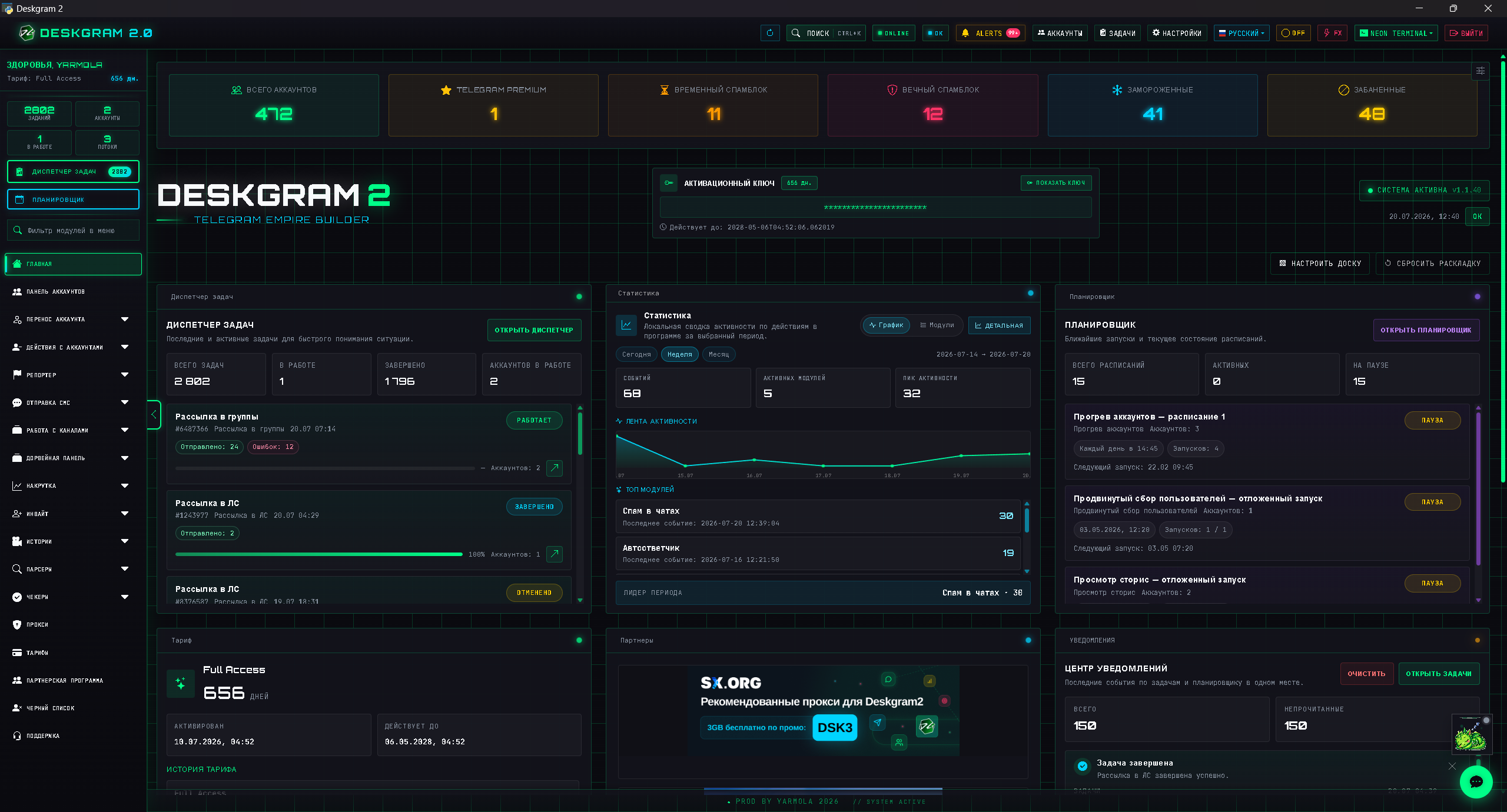
Where Stories are useful
Stories can help in several scenarios:
- announcing a new guide;
- showing a module interface;
- supporting a launch;
- reminding users about web preview;
- adding social proof;
- warming up the audience before a direct campaign;
- mentioning partners or participants;
- creating an extra activity layer for accounts.
If a channel post explains the topic deeply, a Story can give users a fast visual entry into it.
How to connect Stories with content
Stories work better when they are not isolated. Imagine a new article about neuro-commenting. You can create a Story with one short takeaway, show the module interface, and send users to the guide or directly to web preview.
The chain can look like this:
- A site article closes a search query.
- A Telegram post gives the short explanation.
- Stories remind users and add visual proof.
- Web preview lets them inspect the interface.
- The bot or site handles the next interest.
That turns Stories into a real part of the content chain.
Publications, mentions, and views
There are several Story mechanics around promotion: publishing, mentions, and views. Each is useful in a different way.
| Mechanic | What it helps with |
|---|---|
| Story publishing | Fast visual contact |
| Story mentions | Social touch and attention |
| Story views | Activity layer and presence |
| Story series | Launch support and topic reinforcement |
Not every scenario should go straight to a sale. Sometimes the task of Stories is simply to return the user to the right context.
Common mistakes
The first mistake is publishing Stories without linking them to anything else. Then the format disappears quickly and leaves no trace.
The second mistake is making Stories too promotional. Users expect a lightweight format, not a full-screen sales page.
The third mistake is ignoring account condition. If Stories are part of an account grid, the accounts must be prepared, and account warming still matters here.
The fourth mistake is failing to measure clicks. If Stories lead to the site or web preview, you need to know which topics generate interest.
Example of a Story series for one guide
Suppose the site just published an article about collecting audiences from Telegram channels and groups. Instead of one Story, you can build a short series:
- Story 1: the main mistake is collecting users without checking source quality.
- Story 2: show the discovery -> parser -> outreach chain.
- Story 3: show the audience collection module interface.
- Story 4: link to the full guide or web preview.
This works better than a single frame because the user sees a mini narrative.
Using Stories before a larger launch
Stories can warm up the audience before a more active step. Before a messaging campaign or a new guide, you can spend several days publishing short takes around the same topic. Then the next touch no longer feels abrupt.
Example:
- day 1: the problem;
- day 2: a common mistake;
- day 3: a mini solution;
- day 4: a web preview link;
- day 5: the full material.
This is a soft way to build interest without direct pressure.
What to measure in Stories
Views matter, but views alone are not enough. Also track:
- link clicks;
- replies;
- reactions;
- repeat views;
- topic interest;
- relation to future leads;
- which format drives the most engagement.
If Stories get views but no one moves forward, the CTA may be weak or the topic may be too broad.
Mini-FAQ
Do Stories replace channel posts?
No. Posts are better for deep explanations. Stories are better for quick touches and reminders.
Can Stories send users directly to web preview?
Yes, if the user already understands the topic. For colder audiences, a guide is often a better first destination.
Do Stories matter for a B2B product?
Yes, as long as they show interface, process, a case, or a practical insight. Even B2B audiences respond to compact visual formats.
Which Story formats work best
For Telegram promotion, several Story formats work well:
- module interface screenshots;
- one short insight from an article;
- a mini-checklist;
- a before/after process frame;
- an audience question;
- a link to the full guide;
- an update announcement;
- a visual configuration example.
For Deskgram 2, Stories with interface screenshots and a web preview link are especially strong. The user sees a concrete module instead of an abstract promise.
Stories inside a longer funnel
Stories rarely close the sale on their own. Their job is to support momentum. A person may first see an article, then a Telegram post, then a Story, then open web preview, and only after that enter the bot.
This path may look long, but that is normal for a complex product. Telegram automation needs trust and understanding. Stories help bring people back into context without hard selling.
Planning Stories together with posts
If a channel post is about audience collection, the Story can show the collection interface. If the article is about proxies, the Story can show the proxy manager. If you publish a comparison page, the Story can show a short decision table.
Each long-form article can receive a lighter visual version.
Stories as interface demos
Deskgram 2 has one major advantage: users can open a web preview and inspect a module before installing anything. Stories are a perfect format to demonstrate that fast.
Simple Story flow:
- frame 1: “Want to see how audience collection looks?”
- frame 2: show the interface screenshot;
- frame 3: explain what the module does in one line;
- frame 4: link to web preview.
This lowers friction. The user does not need to download the app or read a very long description immediately.
Stories as launch support
If a new article, module, or update is being launched, Stories can support it over several days. One day can highlight the problem, another the interface, another the guide, and another the FAQ.
That makes the launch more visible without falling back to aggressive direct messaging.
Checklist before publishing Stories
Before posting, check:
- Is the topic clear?
- Is there a visual or screenshot?
- Is the next step obvious?
- Does the link go to the correct page?
- Is the Story free from too much text?
- Is the account suitable for the scenario?
- Is the Story connected to a post, guide, or module?
If it fails the checklist, improve it before publishing.
Where Deskgram 2 helps
Deskgram 2 helps tie Stories to accounts, tasks, and other promotion modules.
Useful points:
Safety for Stories automation
Stories look softer than direct messages, but they still use accounts and repeated actions. Prepare the account group with account warming, keep proxy rotation stable and watch Telegram API limits when posting, viewing or mentioning at scale.
For bulk messaging safety, use Stories as a support layer rather than a replacement for strategy. A Story can warm attention before a message, explain a guide after a comment or remind users about a web preview without pushing too hard.
FAQ
Who is this article for?
This article is for teams that want to use Deskgram 2 for Telegram automation, audience growth, messaging or operational workflows.
Do I need warmed accounts and proxies?
In most bulk Telegram scenarios, warmed accounts, stable proxies, conservative limits and small tests reduce risk before scaling.
Where should I test the workflow?
Use the Deskgram 2 web preview links in the article to understand the module, then start with a small controlled task before launching a larger campaign.
Conclusion
Telegram Stories are useful as an additional promotion layer: fast visual contact, reminders, social touch, and support for the content funnel.
Stories work best when they are connected to guides, posts, web preview, accounts, and tasks. Then they stop being random frames and become part of real Telegram automation.