Parsing Channels or Collecting from Comments: Which Telegram Base Is Warmer?
Telegram audience parsing can produce a large base, while collecting users from comments can produce a more contextual one. That does not mean one method is always better than the other. They solve different tasks.
Standard parsing is useful when you need to study a niche, gather a broad audience, or prepare a large segment. Comment collection is useful when the user’s interest in a specific topic matters more than sheer size.
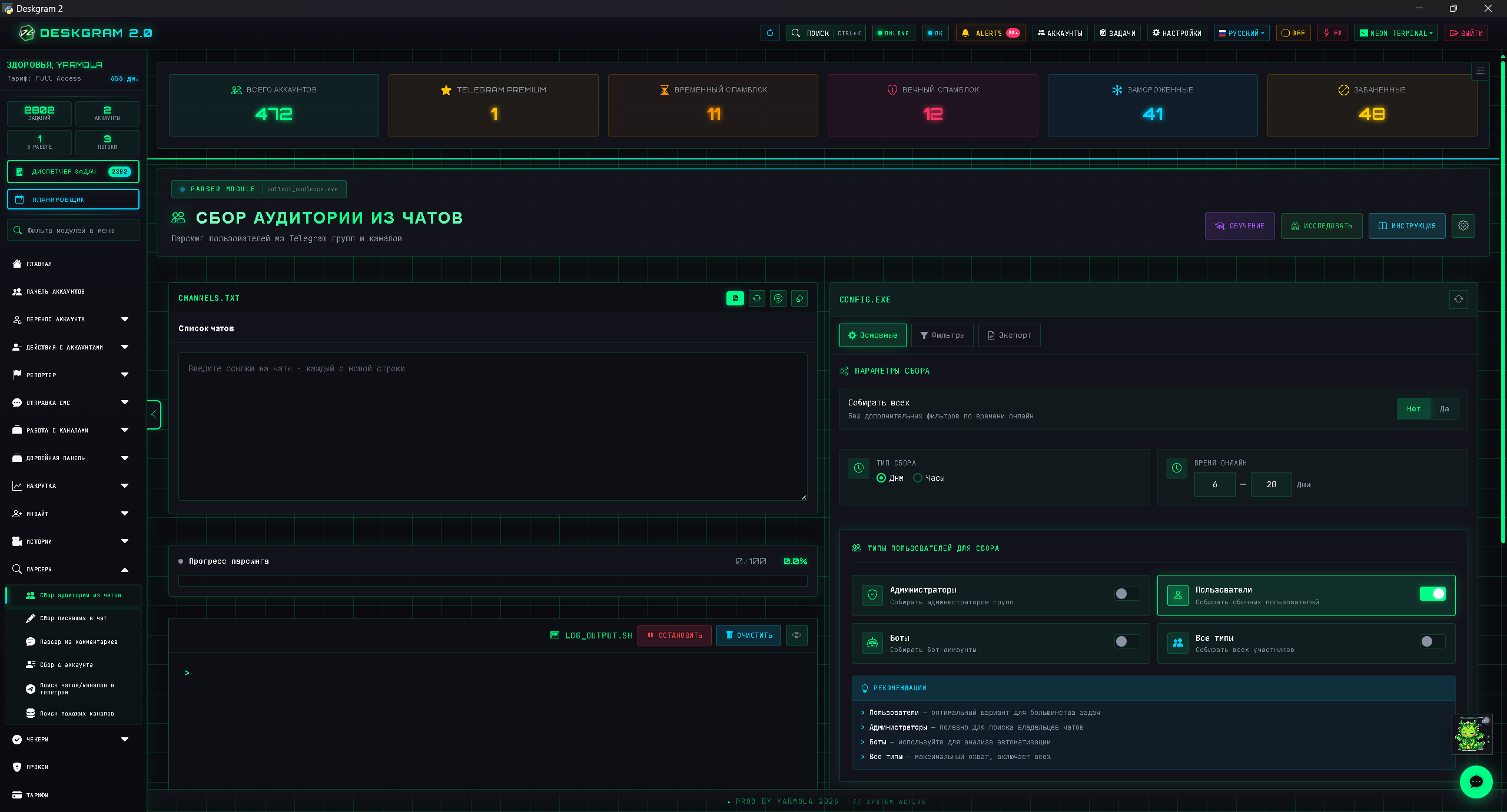
The main difference
| Criterion | Standard parsing | Collection from comments |
|---|---|---|
| Volume | Usually larger | Usually smaller |
| Context | Depends on the source | Tied to a specific post |
| Warmth | Medium | Often higher |
| Filtering | Mandatory | Still necessary |
| Best use case | Analysis, segments, broad base | Topic-specific outreach |
If a person is merely subscribed to a channel, that is one level of intent. If they commented on a post about a topic, that is a much stronger signal.
When to choose standard parsing
Standard audience collection is useful if:
- you are still studying the niche;
- you need a broad base;
- you want to compare several sources;
- segmentation is planned;
- you want to find active participants in groups;
- you need a base for broader testing.
This approach is especially helpful early on, when it is still unclear which sources deliver the best results.
When to choose comments
Collecting from comments works better if:
- there are relevant posts;
- the comment sections are active;
- the topic of the post matches your offer;
- you need a warmer segment;
- the pain context matters;
- the next step will be a DM, autoresponder, or guide.
For example, comments under a post about Telegram Ads problems may be a strong audience for a guide comparing Ads with automation.
The best approach is often both
The strongest model is to use both methods together. Standard parsing helps you map the niche first. Comment collection gives you warmer segments inside the sources you already found.
A working chain looks like this:
- Find channels and groups.
- Collect a broad audience.
- Identify the most active sources.
- Find posts with live discussions.
- Collect users from comments.
- Split segments by topic.
- Launch different communication scenarios.
In this setup, the broad base and the warm base do not compete. They complement each other.
Typical mistakes
The first mistake is treating volume as quality.
The second mistake is collecting comments without taking the post topic into account.
The third mistake is merging broad parsing and comment-based users into one file without labels.
The fourth mistake is launching messages before any validation.
Quick selection matrix
| Situation | Better choice |
|---|---|
| Need to study the niche | Standard parsing |
| Need a warm segment | Comment collection |
| Too few sources | Start with channel discovery |
| There are active discussion posts | Comments |
| Need a large analysis base | Parsing |
| Need precise outreach | Comments + filtering |
This matrix helps you stop arguing about which method is “better.” The better one is the one that fits the current task.
How to preserve base structure
After collection, do not mix everything together blindly. Your base should keep signals such as:
- source;
- source type;
- topic;
- collection date;
- activity level;
- next-step scenario;
- priority.
If the user came from comments under a post about account safety, that detail must survive. Otherwise the contact becomes just another row in a spreadsheet.
Mini-FAQ
Are comments always better than standard parsing?
No. Comments are warmer in context, but smaller in volume. Standard parsing is still useful for building the wide map of a niche.
Can you message users from comments immediately?
It is better to group them by topic first and prepare a message that fits the discussion context.
What should you do with a broad base?
Clean it, segment it, test it in small batches, and avoid sending the same copy to everyone. That is one of the practical foundations of bulk messaging safety.
Step-by-step implementation plan
One solid workflow is:
- Build a niche map through channel search.
- Select sources by quality.
- Run standard parsing for the broad picture.
- Find posts with active comments.
- Collect users from comments.
- Save the topic of each source separately.
- clean the base and remove noise.
- Prepare different scenarios for the broad and warm segments.
This way you keep the strengths of both methods. Standard parsing brings scale; comments bring context.
What to measure
For standard parsing, monitor source quality, the share of active users, duplicates, and whether the base is usable for segmentation.
For comments, monitor topic fit, freshness of the discussion, relevance of the participants, and whether the future message naturally matches what they discussed.
If the comment-based base is small, that is not automatically a problem. Its role is accuracy, not size.
How to use both bases
The broad base can be used for niche analysis, content hypotheses, and careful testing. The comment-based base is better for precise scenarios: sending a relevant guide, showing web preview, or asking a context-driven question.
Example: choosing a base for the first launch
If you need to understand the market fast, start with broad parsing. It will show what sources exist, where activity is higher, and which segments can be separated. But for the first direct messaging test, do not use the entire broad base.
Instead, carve out the warmest part: users who commented, wrote in groups, or came from narrow, topic-specific sources. If these warm segments respond well, you can expand gradually.
Signals of a warm base
A warm base usually has:
- a clear source;
- fresh activity;
- a visible topic of interest;
- a connection to your offer;
- segmentation potential;
- a low amount of noise;
- a clear next scenario.
If the base is large but lacks these signals, it is better used for analysis rather than immediate outreach.
When a base becomes commercially useful
A base becomes commercially useful not at the export stage, but when you can confidently define the next step. If you know who these people are, where they came from, what they discussed, and which topic matters to them, then you can prepare communication.
If you do not have those signals yet, the base is still raw material. It needs cleaning, labeling, and small-batch testing. This is especially important before DMs, invites, and autoresponder scenarios.
The role of content after collection
Not every base should go directly into messaging. Sometimes it is smarter to prepare a guide or post that matches the segment topic first. Then the message stops being a hard sell and becomes a useful continuation of existing interest.
Where Deskgram 2 helps
Useful web previews:
Safety after audience choice
The audience source determines how carefully the next step should be launched. A cold parsed base needs stricter testing, stronger filtering and more conservative Telegram API limits. A comment-based audience may be warmer, but it still requires account warming and stable proxy rotation before outreach.
For bulk messaging safety, compare not only reply rate but also error rate, complaints, weak replies and how clearly users understand the reason for contact. That gives a more honest answer than raw database size.
FAQ
Who is this article for?
This article is for teams that want to use Deskgram 2 for Telegram automation, audience growth, messaging or operational workflows.
Do I need warmed accounts and proxies?
In most bulk Telegram scenarios, warmed accounts, stable proxies, conservative limits and small tests reduce risk before scaling.
Where should I test the workflow?
Use the Deskgram 2 web preview links in the article to understand the module, then start with a small controlled task before launching a larger campaign.
Conclusion
Standard parsing gives you width. Comment collection gives you context. Strong Telegram funnels need both layers: first the audience map, then the warm segments for precise communication.
The key is to preserve source, topic, and activity type. Then your base becomes more than a user list. It becomes material for deliberate outreach.