Telegram AI Chatting: How It Differs from an Autoresponder
Telegram AI chatting is a workflow where AI helps answer messages in chats or dialogs with context. It is often confused with an autoresponder, but these tools solve different problems.
An autoresponder works through rules and prepared branches. AI chatting is useful when user messages are diverse and need a flexible answer. Flexibility still needs boundaries. Without context and guardrails, AI replies become too broad, too confident or disconnected from the business goal.
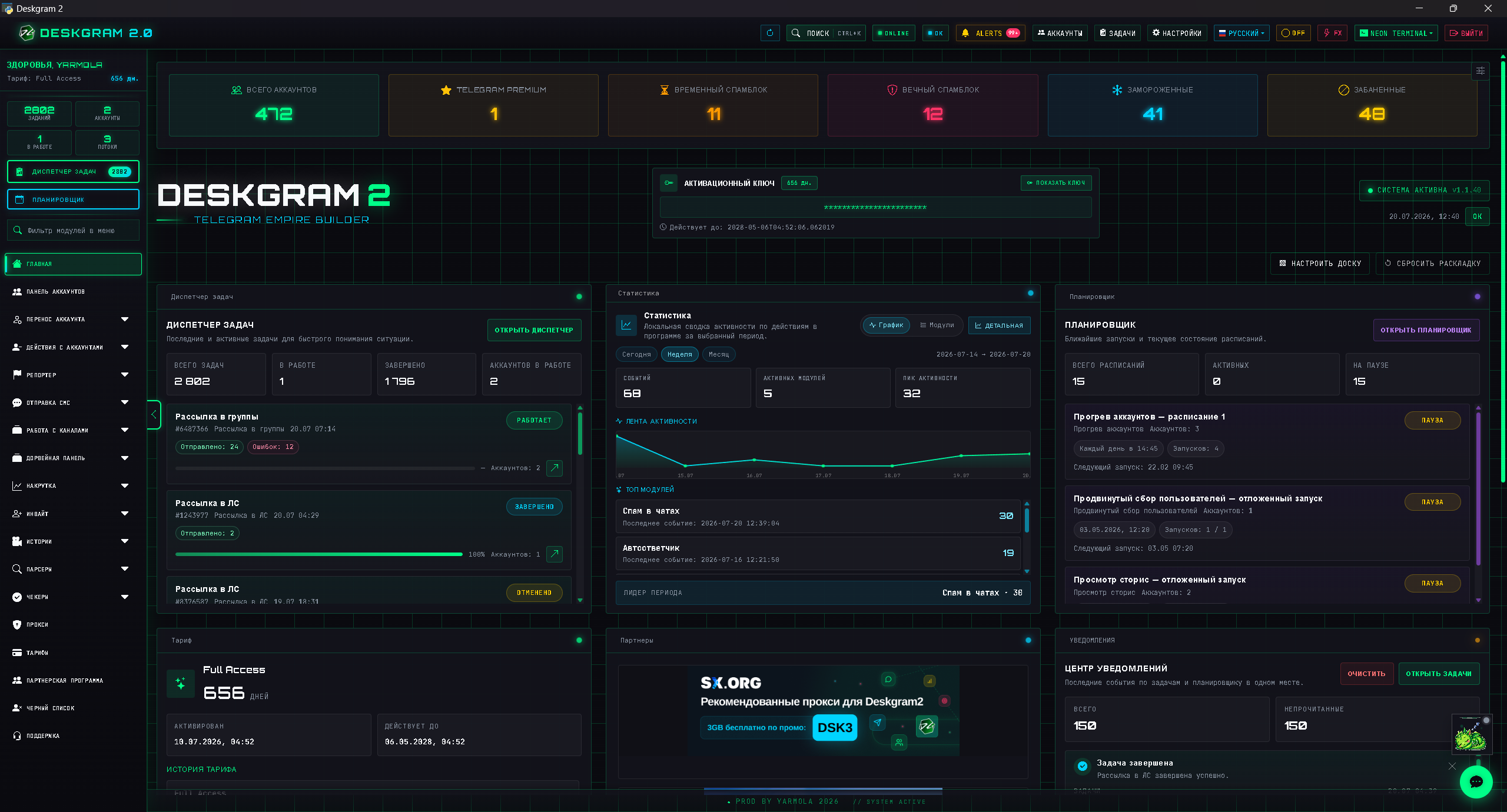
Autoresponder vs AI chatting
| Parameter | Autoresponder | AI chatting |
|---|---|---|
| Logic | Rules and branches | Context-based AI reply |
| Best tasks | FAQ, links, simple signals | Free-form questions and explanations |
| Risk | Repetition | Unpredictable output |
| Control | High | Needs guardrails |
| Best place | DM, bot, post-campaign flow | Chats, discussions, complex replies |
The best result often comes from using both: rules handle predictable signals, AI helps with non-standard questions.
Where AI chatting helps
AI chatting is useful when the goal is not just to drop a link, but to support a conversation:
- explain a Deskgram 2 module;
- answer objections;
- qualify interest;
- react to questions after a comment;
- guide a user to a relevant article or web preview;
- continue a dialog after outreach.
If the task is simply “send this link”, rules are enough. If the user asks follow-up questions, AI can help keep the conversation useful.
Why context matters
AI without context gives generic answers. For Telegram marketing, the prompt should define:
- what the product is;
- which modules exist;
- what not to promise;
- tone and length;
- when to suggest a web preview;
- when to pass the conversation to a human;
- which topics to avoid.
This turns AI chatting from random text generation into a controlled communication layer.
Triggers and guardrails
AI should not answer everything. Use triggers: module questions, comparison questions, safety objections, requests for interface examples, pricing objections or campaign planning questions.
Also define stop rules. Sometimes the right answer is a short response, a link to a guide, or handoff to support.
Useful previews:
Operating AI chatting safely
AI chatting should be connected to the same safety layer as the rest of Telegram automation. If the conversation starts after bulk messaging, comments or group outreach, the system should know the source, offer and next step.
Before launch, prepare accounts with account warming, keep proxy rotation stable and respect Telegram API limits when several modules are active. AI should not continue aggressive follow-ups after refusal, invent product features or bypass handoff rules.
The best use case is not "AI talks forever." It is a controlled reply layer that answers relevant questions, sends users to a guide or web preview and escalates unclear cases to support.
Key takeaways
- AI chatting is not a replacement for strategy.
- Autoresponders are better for simple predictable flows.
- AI replies need context, triggers and restrictions.
- Good AI chatting leads to a next step: guide, preview, bot, request or support.
- Logs from conversations can improve FAQ, content and sales scripts.
FAQ
Who is this article for?
This article is for teams that want to use Deskgram 2 for Telegram automation, audience growth, messaging or operational workflows.
Do I need warmed accounts and proxies?
In most bulk Telegram scenarios, warmed accounts, stable proxies, conservative limits and small tests reduce risk before scaling.
Where should I test the workflow?
Use the Deskgram 2 web preview links in the article to understand the module, then start with a small controlled task before launching a larger campaign.
Summary
Telegram AI chatting is valuable when users ask varied questions and need context. It should be used with clear boundaries, prepared product knowledge and a practical next step, not as an uncontrolled “let AI answer everything” mode.