What Telegram Marketing Means in 2026
Telegram marketing in 2026 is no longer just posting in a channel or sending the same message to a cold list.
Modern Telegram growth is an ecosystem of channels, groups, bots, Mini Apps, Telegram Ads, audience parsing, direct outreach, AI replies, account warming, proxy rotation and careful limits. The mistake is to treat Telegram as one button that generates traffic. In practice, it works as a chain: source discovery, audience collection, account preparation, first touch, follow-up and conversion.
Telegram is a marketing environment, not one channel
Each Telegram surface has a different job:
| Surface | Best use |
|---|---|
| Channels | Content, trust, launches, offers |
| Groups and chats | Discussions, active audiences, objections |
| Bots | Lead capture, delivery, funnels, segmentation |
| Mini Apps | More complex product flows inside Telegram |
| Comments | Contextual first touch and visibility |
| Direct messages | Personal outreach to prepared segments |
| Telegram Ads | Paid reach and official promotion |
If you use only one surface, growth usually hits a ceiling. A channel without a bot loses part of the audience. Bulk messaging without audience quality becomes noise. AI without a scenario writes generic replies. Ads without a follow-up funnel buy views but do not build a system.
The main shift: from actions to funnels
A weak approach looks like this:
buy accounts -> send messages -> waitA stronger Telegram automation workflow looks like this:
accounts -> proxies -> warming -> discovery -> parsing -> segmentation -> outreach -> bot -> follow-upThis difference matters. The second workflow gives you control over risk, quality and repeatability. It also makes it easier to respect Telegram API limits and avoid turning every campaign into a one-time experiment.
Core Telegram marketing models
Content-first model
This is the classic channel model: publish useful content, buy ads, grow subscribers, warm the audience and sell through posts, bots or managers. It works well for media, expert channels, communities and products with a longer trust cycle.
Bot-first model
Instead of sending traffic directly to a channel or website, you send people to a Telegram bot. Once a user starts the bot, you can deliver a lead magnet, segment the user, make follow-up touches and build a more stable funnel.
Outreach model
Outreach uses direct messages, group messages, comments, autoresponders and AI replies. It only works well when the audience is relevant, accounts are prepared and the follow-up scenario is clear.
Discovery -> parser -> outreach model
This model starts with finding the right channels and groups. Then you collect users from relevant places, clean the audience and only after that start communication. It is especially useful for B2B, narrow niches and competitor-based promotion.
Where Deskgram 2 fits
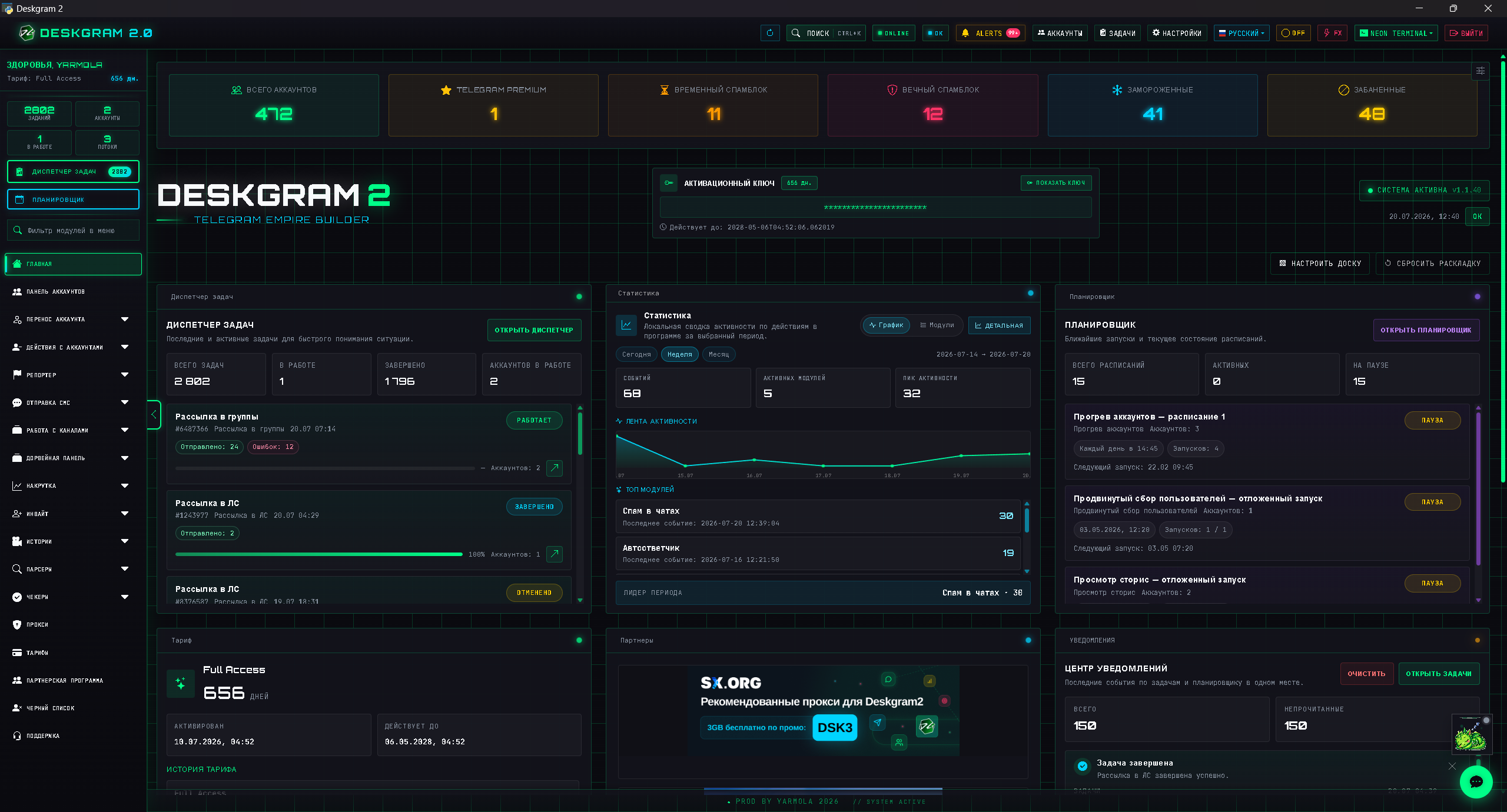
Deskgram 2 is useful when Telegram marketing stops being a single action and becomes an operating system. You can connect:
- account management and account warming;
- proxy checks and proxy rotation;
- channel and group discovery;
- audience parsing and cleaning;
- direct messaging and group messaging;
- AI commenting and AI chatting;
- task planning and campaign control.
You can also preview several modules before installation through the web demo:
Operational checklist for Telegram marketing
Before scaling a Telegram marketing workflow, check the operational layer:
- Define the source of traffic: search, ads, similar channels, comments, groups or existing contacts.
- Prepare accounts with account warming instead of launching cold sessions immediately.
- Attach proxies and keep proxy rotation predictable, not random.
- Respect Telegram API limits and avoid sudden jumps in message volume.
- Test one segment before bulk messaging.
- Connect replies to an autoresponder, AI chatting or a human operator.
- Track failed tasks, flood reactions and weak audience sources.
This is the difference between a one-time blast and a repeatable Telegram automation system.
Key takeaways
- Telegram marketing in 2026 is a funnel, not a single tactic.
- Bulk messaging safety depends on accounts, proxies, limits, audience quality and timing.
- Telegram Ads can bring reach, but bots and follow-up workflows turn reach into an asset.
- AI is useful only when it has context, constraints and a clear next step.
- Deskgram 2 helps connect discovery, parsing, account preparation and communication in one workflow.
FAQ
Who is this article for?
This article is for teams that want to use Deskgram 2 for Telegram automation, audience growth, messaging or operational workflows.
Do I need warmed accounts and proxies?
In most bulk Telegram scenarios, warmed accounts, stable proxies, conservative limits and small tests reduce risk before scaling.
Where should I test the workflow?
Use the Deskgram 2 web preview links in the article to understand the module, then start with a small controlled task before launching a larger campaign.
Summary
The strongest Telegram marketing strategy combines content, bots, discovery, parsing, outreach and automation. The goal is not to press more buttons, but to build a controlled system where each layer prepares the next one.