Telegram Inviting vs AI Commenting: What to Choose for Audience Growth
Telegram inviting and AI commenting solve different growth problems. Inviting is direct: you bring people into a channel, group or community. AI commenting is softer: accounts appear in discussions, add context and create a first touch without forcing the user into a space immediately.
The wrong way to choose is to ask which tool is faster. The better question is: what is the goal, how prepared are the accounts, how relevant is the audience and what happens after the first contact?
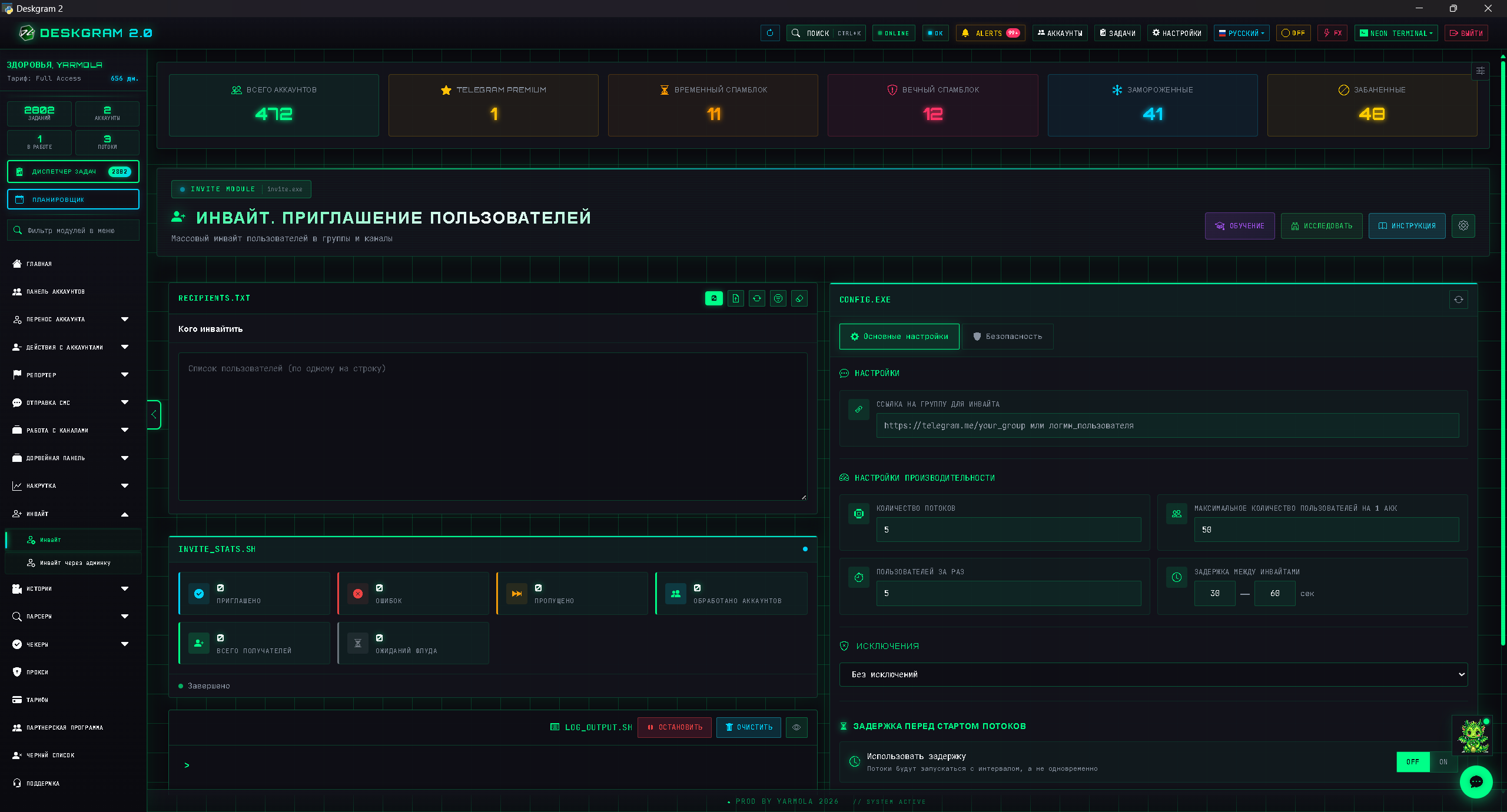
Main difference
| Criteria | Inviting | AI commenting |
|---|---|---|
| Goal | Community growth | Contextual attention and trust |
| Contact type | Direct | Contextual |
| Best input | Clean audience base | Active channels and posts |
| Risk profile | Higher if rushed | Lower when context is good |
| Best next step | Channel content, group, bot | Guide, web preview, DM, bot |
Inviting works when there is a clear place to bring people. AI commenting works when the user needs to understand the topic before taking action.
When to choose inviting
Choose inviting when you already have:
- a relevant audience segment;
- prepared accounts and proxies;
- soft limits and delays;
- a channel or group with useful content;
- a clear reason for the user to join;
- a plan to watch errors and retention.
Inviting people into an empty or confusing community only grows numbers. It does not create business value.
When to choose AI commenting
AI commenting is useful when you need to enter existing discussions and show expertise without aggressive outreach.
It works well when:
- the niche has active channels;
- posts have real comments;
- the product needs explanation;
- direct inviting feels too abrupt;
- you want to discover user questions and pain points;
- you have guides, a bot or a web preview to link later.
Combine both
Often the best strategy is sequential:
- Find channels and discussions.
- Run AI commenting on relevant posts.
- Collect users from comments.
- Check audience quality.
- Warm accounts and attach proxies.
- Test inviting only on a clear segment.
This makes inviting less blind and gives AI commenting a measurable next step.
Useful previews:
Decision rules for commercial projects
Use inviting when the destination is ready: the channel has useful content, the topic is clear and the user will understand why they were invited. Use AI commenting when you still need trust, discovery and context before a stronger action.
For safer scaling, do not let either format run without infrastructure. Account warming, proxy rotation and Telegram API limits define how much pressure the campaign can handle. Bulk messaging safety improves when comments, parsing and invites are staged instead of launched as disconnected tasks.
The strongest route is often:
find donor channels -> comment with context -> collect warm users -> test invite or message -> scale what workedKey takeaways
- Inviting is stronger for direct community growth.
- AI commenting is stronger for trust, research and contextual entry.
- Both need account warming, proxy rotation and limits.
- The best approach is often comments first, then parsing, then a careful invite.
- Measure quality, not only the number of actions.
FAQ
Who is this article for?
This article is for teams that want to use Deskgram 2 for Telegram automation, audience growth, messaging or operational workflows.
Do I need warmed accounts and proxies?
In most bulk Telegram scenarios, warmed accounts, stable proxies, conservative limits and small tests reduce risk before scaling.
Where should I test the workflow?
Use the Deskgram 2 web preview links in the article to understand the module, then start with a small controlled task before launching a larger campaign.
Summary
Choose inviting when the audience and destination are ready. Choose AI commenting when you need context, trust and discovery. Use them together when you want a more controlled Telegram audience growth workflow.