Telegram Group Messaging: When It Fits and How Not to Turn It Into Noise
Messaging inside Telegram groups can be useful, but it is also one of the most sensitive communication formats. Many participants see the message, moderators react to spam faster, and weak copy immediately feels out of place. That is why group messaging cannot be launched as mechanical placement of the same message across a list of groups.
The right approach starts with context: which chats you write in, why the message is relevant there, what value it gives, and what should happen next.
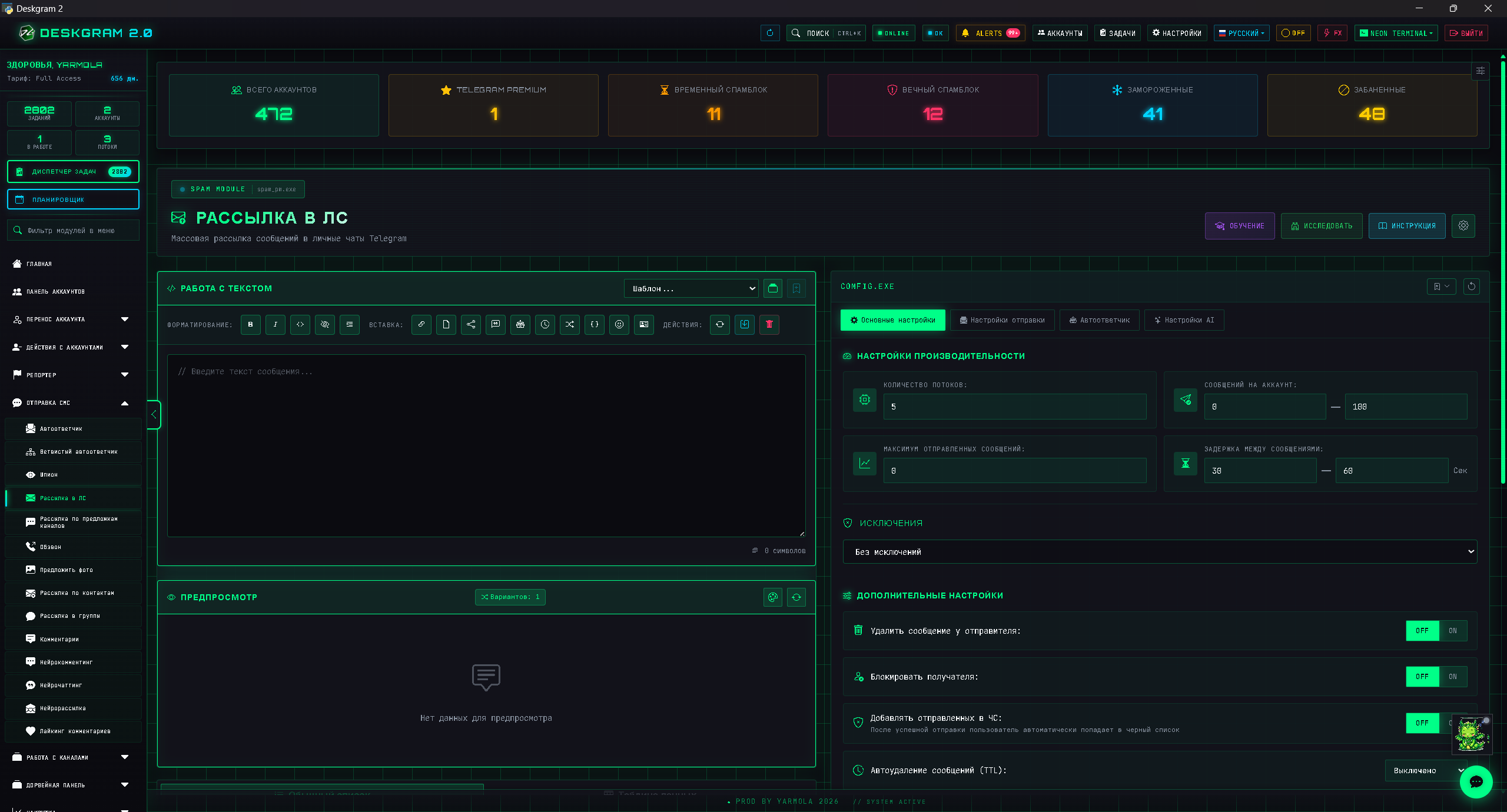
When group messaging actually fits
Messages in groups can work when they match the topic of the discussion and do not feel like random advertising.
Suitable scenarios:
- announcing a useful guide for a niche group;
- answering a recurring problem inside the community;
- inviting users to test a tool for a specific task;
- posting a checklist or instruction;
- writing in your own or partner groups;
- doing soft warming before more precise communication.
Bad scenarios:
- sending the same ad text into every group;
- posting in irrelevant chats;
- ignoring the rules of the community;
- aggressive calls to action;
- having no plan for handling replies or questions.
If the message does not help group participants, it will almost always feel like noise.
How to choose groups
Before launch, groups need to be collected and filtered. Size and topic matter, but so do rules, activity, tone, and moderation quality.
Basic evaluation checklist:
- the chat matches your topic;
- real people are talking there, not only spam;
- participants ask questions;
- the rules allow the needed format;
- there is a real pain point you can answer;
- the chat does not look abandoned or inflated.
Twenty relevant groups are better than five hundred random ones. In group messaging, source quality becomes visible very quickly.
How to write the message
A group message should be shorter and more useful than a classic ad post. It appears inside a live discussion flow, so it has to explain quickly why it belongs there.
Working structure:
- Tie the message to the topic of the chat or discussion.
- Give one useful idea, checklist, or mini-breakdown.
- Add a soft next step.
- Avoid pressure and loud promises.
Example:
I keep seeing questions here about collecting audiences from Telegram chats. We put together a short breakdown on how to find sources first, clean the base next, and only then launch outreach. You can also open the module interface in the browser without installation.
This does not try to sell immediately. It gives value first and leaves the user with a choice.
Limits and account preparation
Group messaging needs prepared accounts. If an account was just added and immediately begins posting across dozens of groups, the chance of errors and restrictions goes up.
Things to prepare:
- accounts and sessions;
- proxies;
- account warming;
- the chat list;
- message limits;
- delays between actions;
- a plan for handling replies;
- a stop list of groups.
Start with a small test. If the first groups react badly, do not scale the same copy.
How to measure the result
For group messaging, the raw count of sent messages is not enough. What matters is whether the reaction was healthy.
Useful metrics:
- how many messages were sent without errors;
- how many groups removed the message;
- how many users replied;
- whether there were link clicks;
- which chats generated discussion;
- which wording caused negative reactions.
If a chat produces only deletions and negativity, it is not a good future source.
Example of a careful scenario
Imagine you promote a tool for Telegram marketing. Instead of posting the same ad copy into every found group, you can act more carefully.
First, find chats where people discuss channel growth, Telegram Ads, bots, and messaging. Then notice which topics appear repeatedly. If users often ask about audience collection, you can prepare a short useful post:
A common mistake in audience collection is starting with parsing before checking source quality. It is better to find channels and chats first, evaluate activity, separate the sources by segment, and only then collect the base. We also made a separate web preview of the audience collection module, so the interface can be opened before installation.
This gives a practical idea first and only then suggests the next step. It does not feel like a banner because it fits the group topic.
How not to burn the list of groups
The group list is an asset. If you send weak copy into it immediately, part of that asset gets lost: messages are deleted, accounts become restricted, and moderators start recognizing the pattern.
To protect the list:
- separate groups by topic;
- do not run one message across all groups;
- respect community rules;
- do not repeat messages too often;
- record the reaction for each group;
- exclude groups where the format is clearly unwelcome.
Over time, you build not just a list, but a map of sources: where useful materials can be posted, where only analysis makes sense, and where it is better not to appear at all.
Mini-FAQ
Can group messaging be the main sales channel?
It is better not to make it the only channel. Groups are good for discovery, social touch, and discussion, but sales usually need a next step: a bot, the site, direct messages, web preview, or consultation.
What is better: a long post or a short message?
In third-party groups, short and useful is usually better. Long posts fit better in your own channels, partner communities, or places where that format is already normal.
Should AI be used to write group messages?
AI can help generate drafts, but the final copy should still fit the exact group. Otherwise it will sound generic and weak.
Where Deskgram 2 helps
Deskgram 2 helps connect group messaging with group search, account preparation, proxies, warm-up, and tasks. That matters because group messaging should not be treated separately from infrastructure.
Useful entry points:
How to place it inside the wider funnel
Group messaging works better not as the final sale, but as the upper or middle layer of the funnel. First you find relevant groups, then publish a useful message, and then move interested users into a guide, web preview, bot, or direct conversation.
That path reduces pressure. The user does not have to decide immediately. They can open the material, inspect the interface, and only then move toward a conversation. In Telegram, that often feels more natural than a direct ad message without context.
A practical chain looks like this: group search -> filtering -> short useful post -> transition to content or web preview -> autoresponder or manual reply handling. If one layer works badly, it can be improved separately without breaking the whole system.
Limits, accounts and proxy rotation
Group messaging still uses real Telegram accounts, so infrastructure matters. Warm accounts first, avoid sudden posting bursts and keep proxy rotation stable while testing.
If several accounts publish into groups at the same time, watch Telegram API limits, repeated errors and duplicate message patterns. The safest group messaging workflow starts with a small set of communities, checks reactions and only then expands the source list.
This approach protects bulk messaging safety while keeping the message useful for the group context.
FAQ
Who is this article for?
This article is for teams that want to use Deskgram 2 for Telegram automation, audience growth, messaging or operational workflows.
Do I need warmed accounts and proxies?
In most bulk Telegram scenarios, warmed accounts, stable proxies, conservative limits and small tests reduce risk before scaling.
Where should I test the workflow?
Use the Deskgram 2 web preview links in the article to understand the module, then start with a small controlled task before launching a larger campaign.
Conclusion
Telegram group messaging works only when it is embedded into the context of the group. It is not a format for brute-force scaling of the same message. It is a tool for precise presence inside relevant communities.
If you choose active groups, write useful posts, run small tests, and review reactions carefully, group messaging can become part of the funnel. If you skip preparation, it quickly turns into noise.