Direct Messages or Group Messages in Telegram: Where There Is Less Noise and More Control
Direct messaging and group messaging in Telegram often look similar because in both cases accounts send messages. But from a marketing point of view, they are different scenarios. A direct message is a personal contact with one person. A group message is a public post inside a community, where rules, moderation, and topic context matter much more.
The choice should not be based on “which one is faster,” but on the goal: do you need a private conversation with a user, or do you need visible presence inside a relevant community?
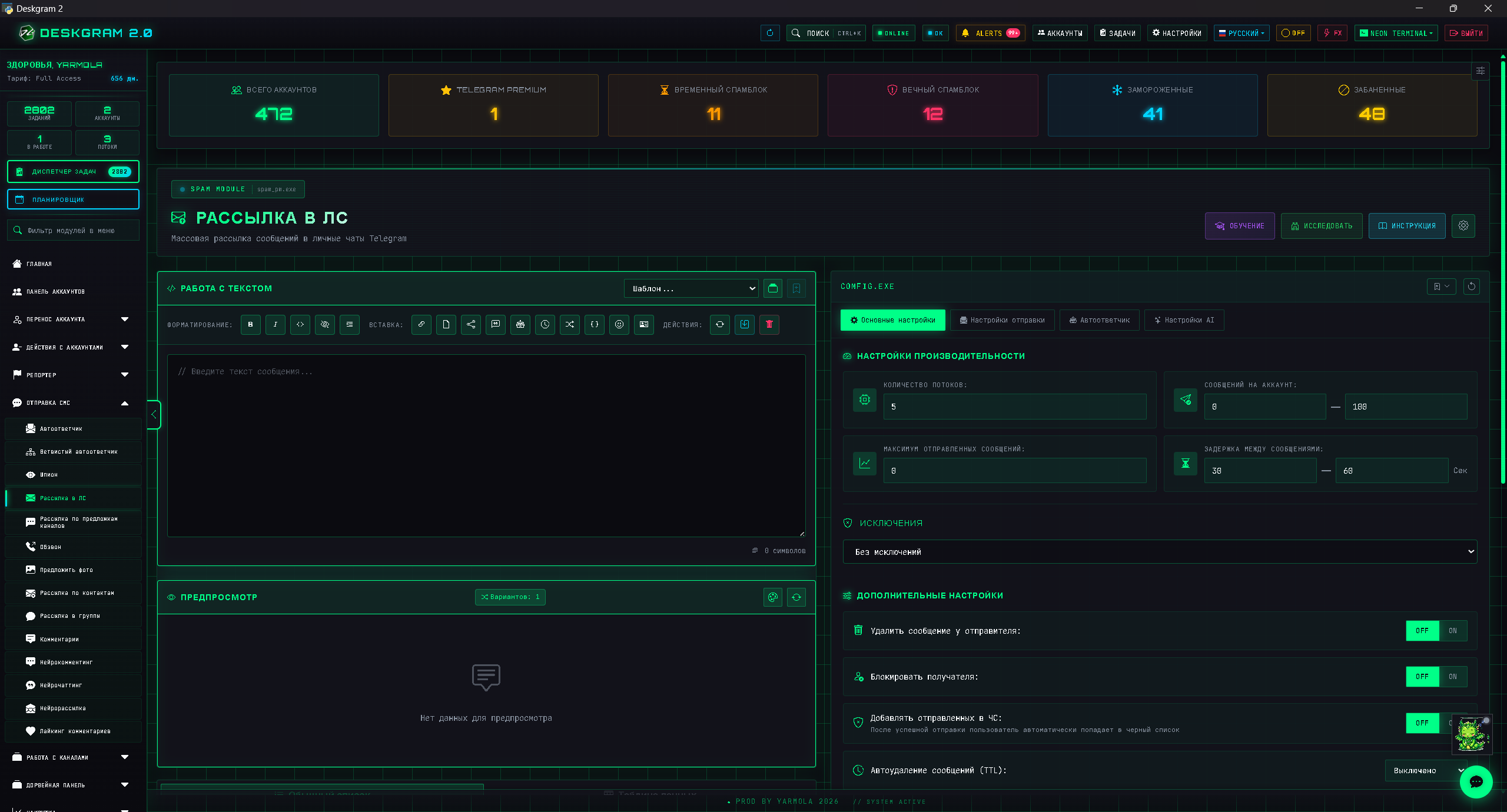
The core difference
| Criterion | Direct messages | Groups |
|---|---|---|
| Contact type | Personal | Public |
| Dialogue control | Higher | Lower |
| Main source of noise | Audience quality and message fit | Moderation and irrelevance |
| Best source | Segmented audience base | Relevant groups |
| Next step | Autoresponder, bot, web preview | Guide, discussion, click-through |
Direct messages are better for precise outreach. Groups are better for contextual visibility and softer distribution of useful content.
When to choose direct messages
Direct messages make sense when you already have a segmented base and a clear reason to write.
DMs are appropriate if:
- the user came from a relevant source;
- the base has been cleaned;
- you have different copy for different segments;
- the autoresponder is ready;
- you have web preview or a guide prepared;
- the team is ready to handle replies.
The main advantage of DMs is control. You can move a person through a scenario and react to their questions directly.
When to choose groups
Group messages make sense when you need to enter a topic discussion or share something useful with a community.
Groups are a better choice if:
- the group is active and relevant;
- the rules allow this kind of message;
- the message is genuinely useful to participants;
- the copy does not look like a banner ad;
- there is a guide or web preview link behind it;
- you are ready to track reactions.
Group messaging gives you less control over the dialogue, but one useful message can be seen by many people at once.
How to combine both formats
Groups can be the first layer, and DMs can become the follow-up. For example, you publish a helpful message in a group, watch the reaction, collect the active users, and later message only the warmer segment.
The chain can look like this:
- Find relevant groups.
- Publish a useful message.
- Collect active users.
- Segment the base.
- Send DMs only to the warm segment.
- Process replies through the autoresponder.
In this model, DMs are no longer sent to a random cold list. They continue an already existing context.
Common mistakes
The first mistake is dropping a direct-response ad text into groups.
The second mistake is sending DMs without a clear reason.
The third mistake is launching without an autoresponder. If replies arrive, they need to be processed quickly.
The fourth mistake is mixing analytics. DMs and group campaigns should not be measured as if they were the same channel.
Quick decision matrix
| Situation | Better choice |
|---|---|
| You already have a segmented base | DMs |
| You need to address a community | Groups |
| Reply handling matters | DMs + autoresponder |
| You need to share helpful content broadly | Groups |
| Brand trust is low | Start with groups or comments |
| The user is already warm | DMs |
Direct messaging is a precision communication tool. Groups are a public presence tool. If you mix up their roles, both formats start working worse.
What should come first
If the base is still cold, it is usually better not to start with large-scale DMs. Start with groups, comments, content, and collection of active users. After that, direct messages will feel less random and more like a continuation of context.
If the base is already warm, for example users filled a form or wrote in groups before, DMs can be the first active step. But you still need a small pilot and an autoresponder.
Mini-FAQ
Which one creates less negativity?
The format with more context creates less negativity. DMs without a reason annoy people, but posting in irrelevant groups annoys them too.
Can the same copy be used both in DMs and in groups?
Usually no. In DMs, copy should feel more personal. In groups, it should be useful for many participants at once.
Which one is easier to measure?
DMs are easier when you want to measure replies. Groups require you to watch reactions, clicks, deletions, and discussions.
Step-by-step implementation
If you do not have a warm base yet, start with groups and content:
- Find relevant groups.
- Check activity and rules.
- Publish a useful message.
- Review reactions.
- Collect active users.
- Split the base by source.
- Prepare a short DM scenario.
- Connect the autoresponder.
If the base already exists, DMs can come first, but only on a small segment. Do not send a message to the whole base before validating the copy, limits, and reply handling. This is part of bulk messaging safety in practice.
How to choose the wording
In groups, the message should be useful for the whole room. In DMs, it should explain the personal reason for contact. These are two different languages.
In a group you can write: “A common mistake in audience collection is…” In a DM you can write: “I saw that you were discussing audience collection…” The difference seems small, but it changes how the message feels. One speaks to a community, the other to a person.
What to measure
For DMs: replies, dialogue quality, clicks, leads, refusals. For groups: reactions, deletions, discussions, clicks, and new contacts. If you mix these metrics, you will not understand which channel actually works.
Example for a B2B product
For a B2B product, it is often better to begin with context rather than with direct outreach. Start by entering relevant groups with helpful material, watch the questions and objections, collect active participants, and only then message the people who showed interest.
If you already have a list of old leads or bot users, DMs may be appropriate from the start. In that case, what matters most is not the chat, but the reason: a product update, a new guide, a web preview of a module, or an answer to an earlier question.
Readiness criteria before direct messaging
Before a DM campaign, verify:
- the base is segmented;
- the user’s source is clear;
- the copy explains the reason;
- the accounts are prepared;
- the autoresponder is ready;
- there is a stop list;
- the pilot launch behaved normally.
If these conditions are missing, it is usually safer to start with softer formats: groups, comments, posts, and Stories.
When the format itself should change
If group posts keep getting deleted, do not just rotate accounts and post the same copy again. The format may simply be wrong for those communities. If DMs produce many refusals, the problem may be the base or the reason for contact.
A good signal to move from groups into DMs is when the person asked a question, reacted to the material, or participated in the discussion. A good signal to move from DMs back into content is when the user is not ready for a conversation yet, but is still interested in the topic.
Where Deskgram 2 helps
Useful points:
Safety comparison
Direct messages put more pressure on account reputation, so account warming, proxy rotation and Telegram API limits should be checked before the first batch. Group messages depend more on source relevance and community rules, but they still need prepared accounts and conservative pacing.
For bulk messaging safety, do not choose the channel only by expected volume. Choose the format that gives users the most natural reason to continue. A warm group interaction can justify a later DM. A direct message can work when the audience source and offer are precise enough.
FAQ
Who is this article for?
This article is for teams that want to use Deskgram 2 for Telegram automation, audience growth, messaging or operational workflows.
Do I need warmed accounts and proxies?
In most bulk Telegram scenarios, warmed accounts, stable proxies, conservative limits and small tests reduce risk before scaling.
Where should I test the workflow?
Use the Deskgram 2 web preview links in the article to understand the module, then start with a small controlled task before launching a larger campaign.
Conclusion
Direct messages give you more dialogue control. Groups give you public presence and can become a softer entry into an audience. The better choice depends on the base, the goal, and the state of your infrastructure.
A strong strategy often combines both formats: first context inside groups, then a careful DM scenario for the users who showed real interest.