Telegram Contact Messaging: Scenarios, Limits, and Preparation
Telegram contact messaging is different from generic cold outreach. Here, the message itself matters, but so do the source of the contacts, the quality of the list, the interaction history, and the user’s expectations. A contact list collected without a coherent relationship context may perform worse than a small segment of active users.
That is why contact messaging should be treated as its own scenario, not as a copy of ordinary DMs.
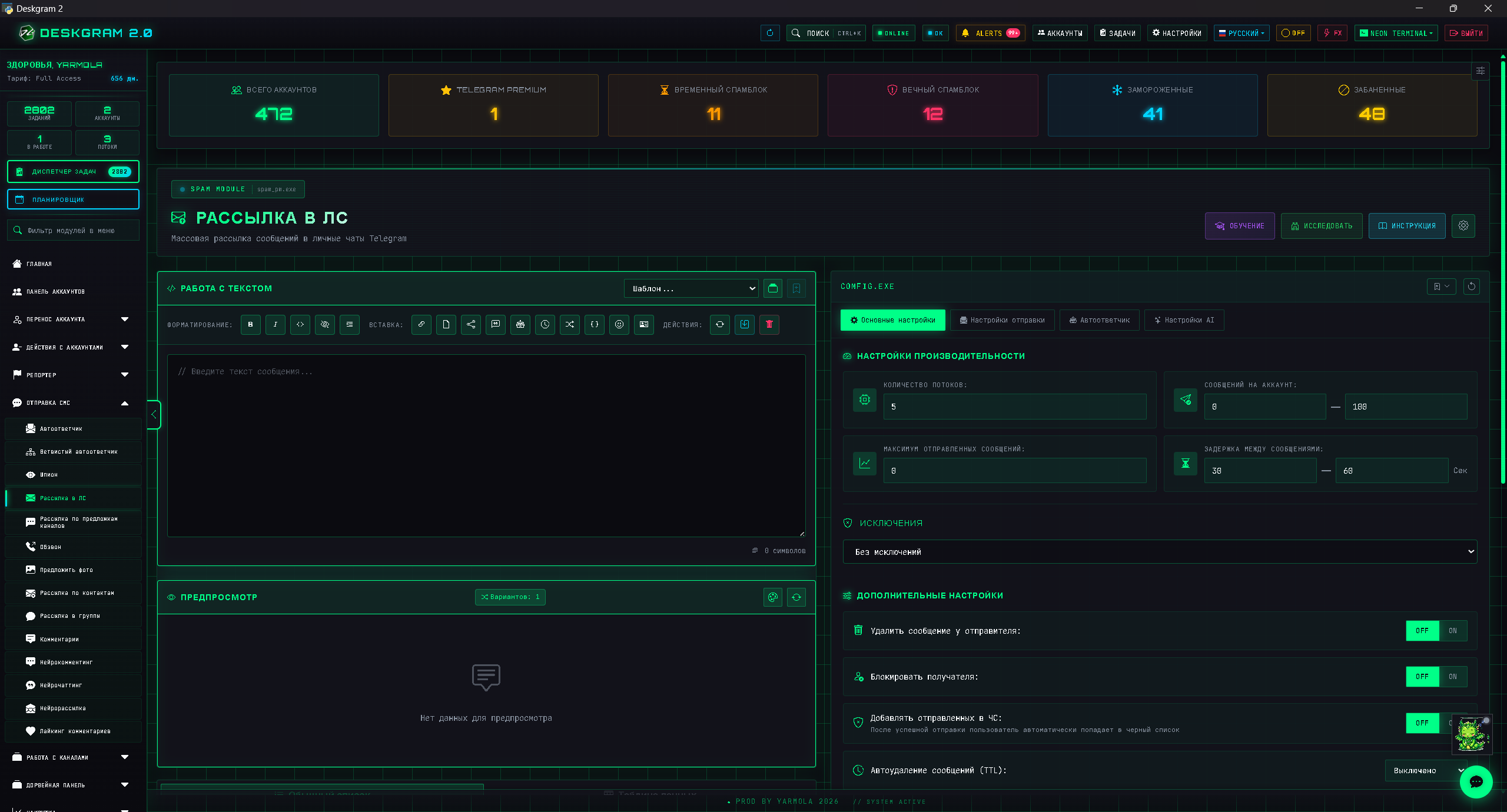
When contact messaging makes sense
This format works best when you have a list of people with whom some prior connection or legitimate reason for communication already exists.
Examples:
- customer bases;
- webinar attendees;
- bot users;
- CRM contacts;
- leads from the site;
- users who shared a contact voluntarily;
- segments after consultations or applications.
If a contact appeared from an unclear source, do not automatically call it warm. Warmth is defined not by the presence of a phone number or username, but by relationship context.
How contacts differ from collected audiences
Collected audiences usually come from channels, groups, comments, or chats. A contact base can be closer to CRM logic: you already have a source, some history, and a reason to write.
| Base type | Main risk | What matters most |
|---|---|---|
| Parsed from chats | Part of the audience may be weakly relevant | Source and activity |
| Comments | The post context can get lost | Discussion topic |
| Contacts | Lists may be outdated or mixed | History and segment |
| CRM leads | Different stages of the funnel | Personalization |
If you send one generic text to every contact, you waste the biggest advantage of a warmer base.
How to prepare the list
Before launch, split contacts by source and current state.
Minimum segmentation:
- new leads;
- old customers;
- inactive contacts;
- bot users;
- people from earlier campaigns;
- contacts without a clear source.
Each segment needs a different reason. A new lead can get a useful resource. An old client can receive a product update. An inactive contact may need a soft reactivation with specific value.
How to write the message
In contact messaging it is especially important to remind the user of the context. The person should quickly understand why you are writing.
Example:
Hi. You previously left a request related to Telegram promotion. We updated Deskgram 2 and added module web previews, so now the interface can be opened in the browser before installation. If it is still relevant, I can send you the exact section.
This does not feel random, because the context and the next step are both clear.
Limits and reply handling
Even when the base is relatively warm, you should not start with huge volumes. Contacts may be outdated, interest may have changed, and some people may no longer remember the prior interaction.
Before scaling:
- launch a small segment;
- check the replies;
- refine the wording;
- prepare the autoresponder;
- add stop words and exclusions;
- save results by segment.
Replies from contact-based lists are often more valuable than cold replies because they show the real state of older leads and existing clients.
Example scenarios
It is better to prepare different scenarios for different relationships.
| Segment | Reason | Next step |
|---|---|---|
| Old leads | Product update | Web preview link |
| Bot users | New material or feature | Guide or short checklist |
| Clients | Module update | Instruction or demo |
| Inactive contacts | Soft reactivation | Question about current relevance |
| Contacts without source | Careful check-in | Short clarification |
This works much better than one universal broadcast. The user understands why you are writing, and the team gets cleaner analytics.
How to connect contact messaging with guides
If you already have educational materials on the site, contact messaging becomes less sales-heavy. Instead of a direct offer, you can send useful content.
Example:
Hi. We updated our guide about preparing accounts before Telegram campaigns. It now covers account warming, proxy rotation, Telegram API limits, and test launches. If that is relevant for you, I can send the link.
This works especially well for older leads. It does not pressure the sale, but it brings the person back into the product context.
Common mistakes
The first mistake is assuming every contact base is warm. If the person does not remember the interaction, the message is almost cold.
The second mistake is not refreshing lists. Contacts age, interest changes, and some people already solved the problem.
The third mistake is not giving people a chance to decline. A polite close reduces negativity and helps clean the base.
The fourth mistake is not recording results. If you do not track which segments replied, every future campaign starts from zero again.
Mini-FAQ
Can you send the same message to every contact?
You can, but quality usually drops. Even basic separation between old leads, clients, and bot users makes the copy more precise.
What if the user no longer remembers who you are?
Remind them briefly about the source of the contact and do not argue if they are not interested. Aggressive justification only creates more negativity.
Where should contact messaging lead: the site or web preview?
If the user wants to understand the product quickly, web preview works well. If they need education or context first, a guide is usually better.
Where Deskgram 2 helps
Deskgram 2 can serve as the operational layer for account preparation, task control, messaging flows, autoresponder logic, and web preview transitions.
Useful web previews:
How it fits into the wider funnel
Contact messaging works strongest as a return and reactivation channel. It should not be mixed with the very first cold touch. If a person already existed in your CRM, bot, application flow, or client base, the next message should continue that earlier context.
For example, an old lead can receive an updated guide or the web preview of a specific module instead of a generic sales pitch. A client can see a newly added feature. A bot user can receive a material that extends the topic they already care about.
The funnel can look like this: contact base -> segmentation -> useful reason -> short message -> autoresponder -> web preview or guide -> manual handling of warm replies. Then contact messaging becomes a careful reactivation channel instead of noise.
FAQ
Who is this article for?
This article is for teams that want to use Deskgram 2 for Telegram automation, audience growth, messaging or operational workflows.
Do I need warmed accounts and proxies?
In most bulk Telegram scenarios, warmed accounts, stable proxies, conservative limits and small tests reduce risk before scaling.
Where should I test the workflow?
Use the Deskgram 2 web preview links in the article to understand the module, then start with a small controlled task before launching a larger campaign.
Conclusion
Telegram contact messaging works better when it feels like the continuation of an existing relationship instead of cold spam. The real value of the base is the context: where the contact came from, what the person already did, and which next step actually makes sense.
If you segment the list, write with a clear reason, and test in small volumes, contact messaging becomes a solid tool for reactivation, return traffic, and communication with warm leads.