Collecting an Audience from Comments: Why It Is Warmer Than Standard Parsing
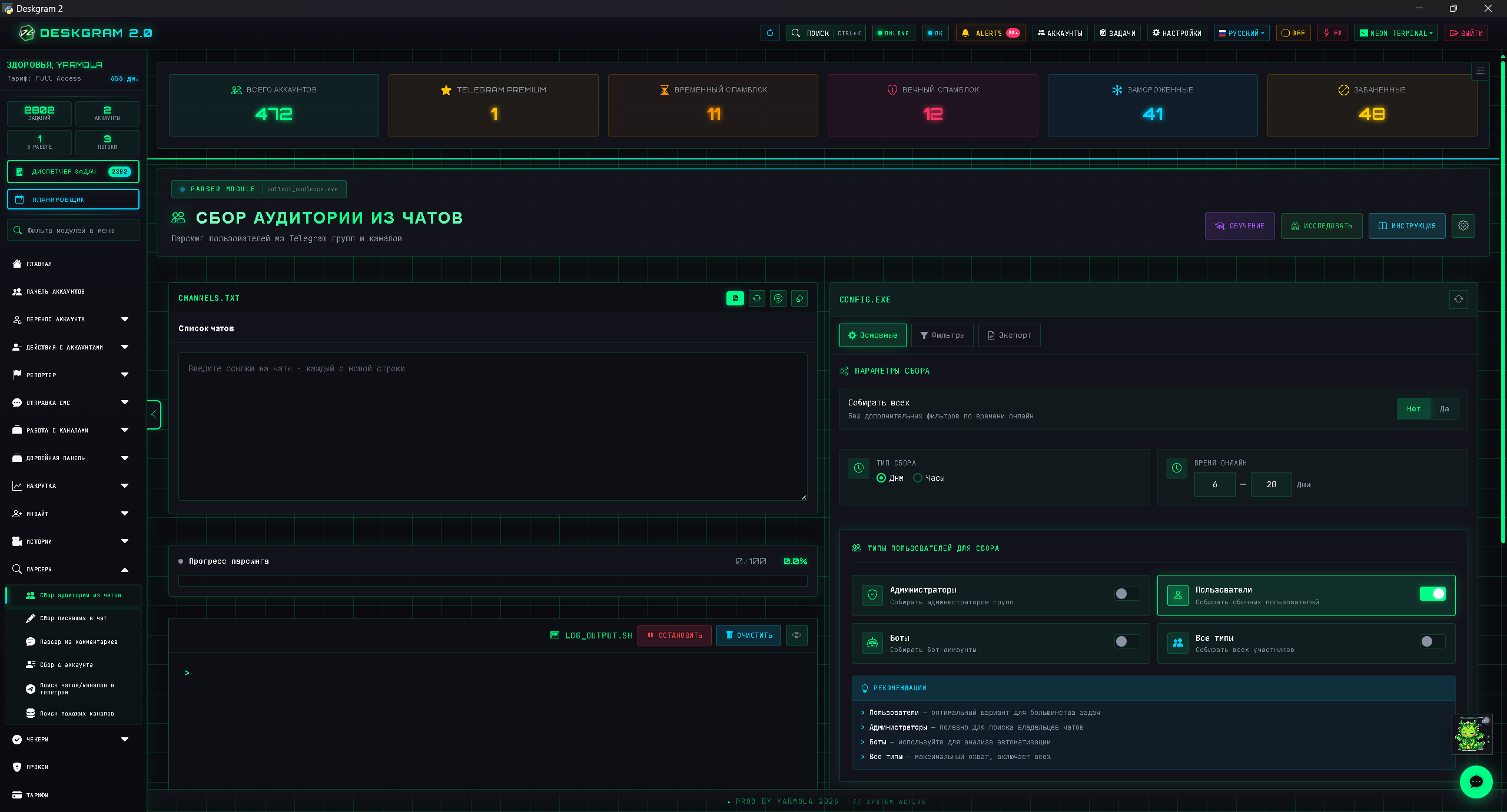
Collecting an audience from Telegram comments often gives you a clearer and warmer segment than simply scraping channel or group members. The reason is simple: a comment is an action. The user did not just exist in the audience. They already reacted to the topic, shared an opinion, asked a question, or joined a discussion.
For growth, that is an important signal. If someone comments on a post about Telegram Ads, bots, parsing, or sales, their interest becomes much easier to interpret. That is why collecting from comments matters not as “yet another parser,” but as a way to find users inside a concrete context.
Why comments differ from a standard list
A standard member list answers the question, “who belongs to this channel or chat?” Comments answer another question: “who became active around a specific topic?” For marketing, the second question is often more valuable.
| Source | What it shows | Risk |
|---|---|---|
| Channel members | General interest in the source | Lots of passive users |
| Chat members | Belonging to a community | Topics may be mixed |
| Users who wrote in chat | Fact of activity | Message quality still needs review |
| Comments under a post | Interest in a specific piece of content | You must account for the post topic |
If you collect users from comments, keep not only the user but also the context: under which post they wrote, what the publication was about, and what the discussion topic was.
Which posts to choose
Not every post fits this workflow. Comments under entertainment or controversy-driven content may create activity, but they do not always create a commercially useful segment.
It is better to choose posts where a specific pain point or job is being discussed:
- how to attract subscribers;
- how to set up advertising;
- how to avoid bans;
- how to automate repetitive work;
- how to collect an audience;
- how to work with bots;
- how to promote a channel or product.
The closer the post topic is to your offer, the easier it is to design the next step.
How to preserve context
The main value of comments is not the activity itself, but the “user + topic” connection. That is why it helps to segment the list by source after collection.
Minimum internal fields:
- channel or group;
- link to the post;
- post topic;
- collection date;
- type of interest;
- likely next scenario.
For example, users collected under a proxy-related post may fit an account-safety scenario. Users from AI discussions may fit neuro-commenting or AI chat flows. Users from advertising-related posts may fit a Telegram Ads vs automation comparison.
How to connect comment collection with neuro-commenting
Comment collection and neuro-commenting complement each other very well. First you can find channels where the relevant topics are discussed regularly. Then you can build a presence in the comments and collect active participants from those discussions in parallel.
Example sequence:
- Find channels in the niche.
- Select posts with live discussions.
- Collect the audience from comments.
- Split users by topic.
- Launch soft outreach or an autoresponder.
- Keep monitoring new discussions through comment scenarios.
In this model, comments stop being noisy activity and become a source of intent signals.
How to use the collected audience
Users collected from comments should not go straight into one mass message blast. It is much better to prepare several scenarios.
Possible next steps:
- send a useful resource tied to the discussion topic;
- share a link to the web preview of a specific module;
- invite the user into a bot with a breakdown;
- offer a checklist;
- use the audience for pain-point analysis;
- build a dedicated segment for offer testing.
For example, if people discussed problems with mass messaging, it makes more sense to show them a resource about careful Telegram outreach and bulk messaging safety, not a generic ad about the software.
Example scenario for a B2B niche
Imagine you promote a Telegram marketing product. You find a channel that regularly publishes breakdowns on traffic, messaging, bots, and advertising. Under one post, people are discussing why Telegram Ads brings clicks but not always leads.
In that case, comments can be used like this:
- Collect users from the discussion.
- Label the source topic as “Telegram Ads and leads.”
- Separate people asking questions from those only arguing.
- Prepare a resource about the Ads + automation combination.
- Send a soft message with a link to the article or web preview.
This scenario is much more precise than blasting every channel member. You are not talking to an abstract audience. You are talking to people who already joined a discussion around the exact problem you solve.
Mini FAQ
Can you collect comments from any channels?
Technically yes, but for marketing only the sources tied to your offer matter. Otherwise the list may be active but irrelevant.
Are comments always warmer than member lists?
Not always. Comments are warmer when the post was thematic and the discussion was meaningful. If the comments came from entertainment arguments, the value of that list is lower.
Should you message the user right after collection?
It is better to segment the list first and prepare a message for the context. A rushed launch without a scenario can waste the advantage of a warm audience.
Mistakes in collecting from comments
The first mistake is collecting everyone without accounting for the post topic. That destroys the main advantage of comment collection: context.
The second mistake is choosing only the loudest discussions. A large number of comments does not always mean quality. Sometimes a smaller thread about a specific problem is more valuable than a huge argument about everything.
The third mistake is not cleaning sources. If a channel is spammed, inflated, or unrelated to your niche, comments from it will only weaken the base.
The fourth mistake is not preparing the next step. Collection for the sake of collection quickly becomes an archive of users with no clear follow-up.
Where Deskgram 2 helps
In Deskgram 2, comment collection can be part of a full chain: source discovery, discussion analysis, audience collection, neuro-commenting, direct messaging, and autoresponder flows.
Useful web previews:
Conclusion
Collecting an audience from comments is valuable because it shows not just membership in a channel, but active interest in a topic. That makes the list warmer and easier to use in follow-up communication.
If you preserve post context, clean the sources, and plan the next step in advance, comments become a strong source for Telegram marketing: from pain-point analysis to soft outreach and AI communication.
The main practical rule is simple: never separate the user from the topic they reacted to. That connection is what makes comment collection stronger than a blind member export and helps you send messages with a real reason behind them.
So before launching the next action, it is always worth reopening the source post and checking once more: does the discussion topic really match what you plan to offer the user?
Operational note
Comment audiences are warmer, but they still need safe handling. Before outreach, check account warming, proxy rotation and Telegram API limits for the accounts that will contact those users.
Because the audience already has context, the first message should reference the topic softly instead of behaving like a cold blast. This improves Telegram automation quality and reduces the risk of treating a warm signal like a random export.